.png)
The Materiality of Memory: Why Photographs are Objects, Not Just Images

Updated: Aug 11
From the magnets on our refrigerator to the polaroids in our wallet, the physical photos we surround ourselves with hold the story of who we are.
Think about the last time you held an old printed photograph in your hands.
Before your eyes even processed who was in the picture, your hands were already moving. Your fingers touched the paper. Your thumb gently traced the surface over the face of someone you love.
Now, compare that to scrolling past a thousand pixels on your cold glass phone screen today.
We live in an age of dematerialized light, letting our most sacred moments dissolve into digital archives we rarely ever reopen. But when a photograph is printed, when light is fixed onto paper, something radical occurs. The image stops being just a flat visual. It enters the physical world. It becomes a living, breathing object.
Our Memory Doesn't Sit in Our Eyes—It Sits in Our Hands
Visual anthropologist Elizabeth Edwards points out something profoundly moving:
Western culture has unfairly trapped photography in our eyes. We treat a photo like a window to look through, completely ignoring the paper, the frame, and the hands holding it. (She calls this obsession "ocularcentrism," but really, it just means we forgot how to touch our memories).
Edwards shows us that a physical photograph requires "embodied access" -
we need to feel it in our bodies:
Touch comes before sight: We pick photos up, hold them close to our chest, or tuck them into a wallet. This physical interaction gives the photo "resurrectional qualities" - it is the touch, not just the gaze, that brings the emotion instantly back to life.
Photos age with us: Physical photos yellow, fray at the edges, and soften over time. This wear and tear isn't a flaw; it's the physical proof that this memory was lived, handled, and deeply loved.
Location creates meaning: A picture framed on a high living room shelf becomes a formal altar; that exact same picture, folded in your wallet, becomes a secret, intimate talisman.
A photo isn't just what you see; it is the physical home you built for your identity.

There is a quiet magic in holding this photograph in my hand. In the black-and-white frame, my mother is holding my sister Yael and me—a tiny, swaddled baby. Her hands held us then; today, decades later, my hand holds her.
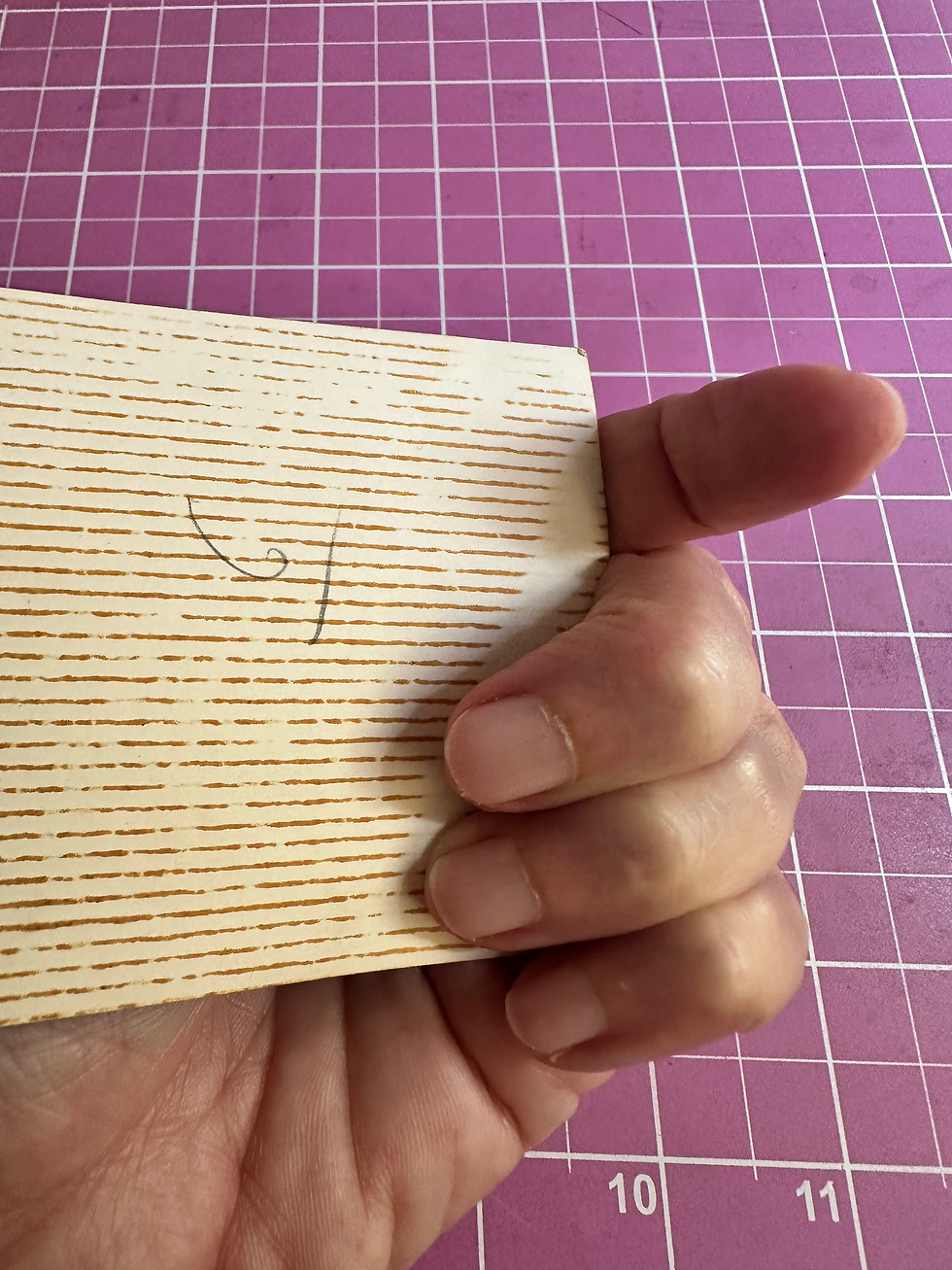
When you flip the photograph over, you meet the raw material of time: the aged paper, the texture of the stripes, and a tiny number scribbled in pencil. The back of the photo is proof that this memory isn't frozen. It lived in the real world. It passed from hand to hand, was touched, was pinned to a refrigerator, and was kept with love.
A photo isn't just what you see; it is the physical home you built for your identity.
The Refrigerator as a Domestic Shrine

Look at your kitchen refrigerator right now.
Architecturally, it’s just a functional appliance. But emotionally, it is what anthropologists call a Domestic Shrine - an organic, ever-evolving altar of your daily life.
Unlike a formal picture frame sitting quietly in a hallway, the photos magneted to your fridge are alive. They hear you making your morning coffee. They get touched by passing hands. They are part of the daily ecosystem of your continuous present.
When you magnet a photograph to your fridge, psychoanalyst Vamık Volkan explains that you are creating a Linking Object, an anchor that holds onto a specific frequency of who you were, so you don't lose yourself as the world keeps shifting around you. Social critic Susan Sontag noted that collecting these physical photos is our way of holding onto reality, creating miniatures of ourselves we can safely hold in our hands.
Looking Through The Kind Gaze™
When you begin to see your photographs not as passive pixels, but as active, living objects in your space, everything changes.
Instead of looking at a photo to judge how you looked, you can offer it The Kind Gaze™- a compassionate, gentle way of seeing that honors both the image and the physical object. You begin to ask:
What energy is this physical object quietly radiating into my kitchen every morning?
Which parts of my story am I keeping visible, and which have I hidden away in dark drawers?

Ready to Go Deeper? This Fall, We Turn Theory Into Living Experience (in-person) If you are tired of living behind screens and feel a deep longing to reconnect with your physical world, your history, and your true identity, I am opening the doors to two immersive, once-in-a-lifetime journeys this autumn.
These are not just workshops- they are containers for deep personal transformation:
EveryTHING We Keep | in-person Masterclass
Costa Rica (Sept 25–27, 2026)

Unpack your Symbolic DNA. In the lush, healing sanctuary of Costa Rica, we dive deep into the emotional weight of the physical objects and photos we hold onto. You will learn how your physical surroundings mirror your unconscious mind, how to release what no longer serves you without guilt, and how to carry memories safely within your body instead of feeling burdened by stuff.
The Kind Gaze Retreat
in Mexico
(Nov 5–9, 2026)

Our flagship, deeply transformative gathering.
Every participant arrives with 50 physical photographs. On our first day together, we won't just talk—we will build a private exhibition of our personal domestic shrines. Through the gentle, guided framework of The Kind Gaze™, we will walk through this visual landscape together, healing past versions of ourselves and stepping into a unified, radiant future.
Start Practicing Today (Free):

You don't have to wait for the fall to change how you see. Join our quiet, free 7-Day Gentle Observation Group to begin offering The Kind Gaze™ to your daily life right now:
Much love, Efrat

Comments